


Every founder faces a dilemma, whether to maintain an enduring culture based on the founding principles that have driven its success, or allow it to continuously evolve over time.
In 2026, the key to long-term scalable growth is not to choose between preservation and evolution, but to systemize the culture. This involves embedding the incentive structures and decision-making frameworks that institutionalizes growth without the tenure of the founder or executives.
This series of articles explores how companies refine, and systemize their culture that promotes sustained growth over the long-term.
Bridgewater Associates founded in 1975 became one of the largest hedge funds and offers a masterclass in how to hard-wire the culture for an organization to independently thrive.
Bridgewater’s Original Philosophy
Bridgewater exemplifies the development of a permeating growth culture through its constitution. Derived from an adopted philosophy statement released in 1997, this constitution built a culture of “idea meritocracy” based on truth and radical transparency.
“The philosophy statement is our constitution, first written down over two decades ago by Ray Dalio, Bridgewater’s Founder and Mentor. Its essence remains a key anchor point for us today.
My overriding objective at Bridgewater is excellence, or more precisely, constant improvement. First and foremost, l want to have a culture of excellence that results in a superb and constantly improving company in all respects. To achieve excellence I believe that truth, or more precisely, one’s accuracy in understanding reality, is essential. I also believe that radical openness, though it can be uncomfortable, is essential in getting at truth. Truth serves as the foundation for excellence, and openness helps to assure truth.”
Hardwiring Idea Meritocracy
Central to Bridgewater’s idea meritocratic culture are two decision-making tools: 1. Believability-Weighed Voting and 2. Baseball Cards for employee strength/weaknesses.
The best decisions are reached using Believability-Weighed Voting, where the most capable individuals work through disagreements with others that have independently assessed what is true, and offered viable solutions. Within Bridgewater, the most believable opinions are those who:
- Have repeatedly accomplished the task in question.
- Have demonstrated an understanding of the cause-effect relationship behind their conclusion.
In this believability mechanism, every employee has a vote, but not every vote is equal. The believability of an opinion is calculated based off their track record and demonstrated expertise within a given field.
The opinions of those with a history of success in that area are weighted more heavily, which removes ego and hierarchy within company decision-making. This draws focus to the quality of the argument and credibility of the source to determine effective outcomes.
To support this believability metric, Baseball Cards documenting the employees’ strengths and weaknesses are actively recorded and weighed against their experience and track records. This transparent protocol ensures that believability is based on evidence, and not perception.
When the believability weighting is correctly assessed, it is described in Principles:
“It is the fairest and the most effective decision-making system it not only produces the best outcomes but also preserves alignment, since even people who disagree with the decision will be able to get behind it”.
Relative to typical organizational structures, where decision-making is top-down, the meritocratic culture implemented within Bridgewater does not aim to rely on the brilliance of any reliant founder, executive or combination of the board. Instead, the “best idea” promoted by this cultural meritocracy makes the firm’s success less dependent on any one person.
Bridgewater Post-Departure
After Ray Dalio stepped down as CEO of Bridgewater in 2017 and finally cut his ties with Bridgewater in 2025. During the eight years following Dalio’s departure as chief executive, his flagship Pure Alpha II Performance fund achieved an average of 10% in growth returns.
In analyzing this decision-making system of Bridgewater, within a hedge-fund environment where performance outcomes can be financially assessed over defined periods, the culture that Dalio developed has been attributed as a key factor in driving scaled portfolio growth.
Bridgewater’s culture that Dalio has refined over the years with new principles and decision-making systems reveals the progressiveness applied by the founder. While Dalio built a meritocratic culture within Bridgewater, talent pools are often limited within other industries, and organizational positions differ, resulting in the need to systemize protocols to build specific cultures optimal for each organization.
What can be specifically taken from Ray Dalio’s development in building Bridgewater, are the processes executed over time that has refined its culture that has been a major factor to driving its scalable growth.
Progressive Cultural Refinement
Bridgewater was founded in 1975, and its constitution was written in 1997 and in 2011, Principles was released to the public. What made Bridgewater specific in enhancing its hedge fund growth and operational scale was that its constitution and Principles attracted other talented people and wealthy investors into the hedge fund through its public release of revealing its meritocratic culture to stakeholders.
Beyond its decade-long track record of strong investment performance, this meritocratic culture reinforced the increase in employee talent to drive scalable growth within Bridgewater without the founder’s tenure.
Key Takeaway: Use your cultural principles as a recruiting, and alignment tool. To publicly release “how we work” attracts talent and capital into your organization.
Note: Dalio’s style of cultural leadership succession is not applicable for many companies, but the cultural blueprint he has developed reveals how founders can refine their organization’s culture to drive scalable growth.
For an organization’s culture to reinforce growth post-departure of the founder is critical for ensuring profitability is not only sustained but institutionalized.
The next article reveals how Silicon Valley companies can institutionalize a new culture of growth.
This is Part 4 of the Scalable Growth Blueprint.
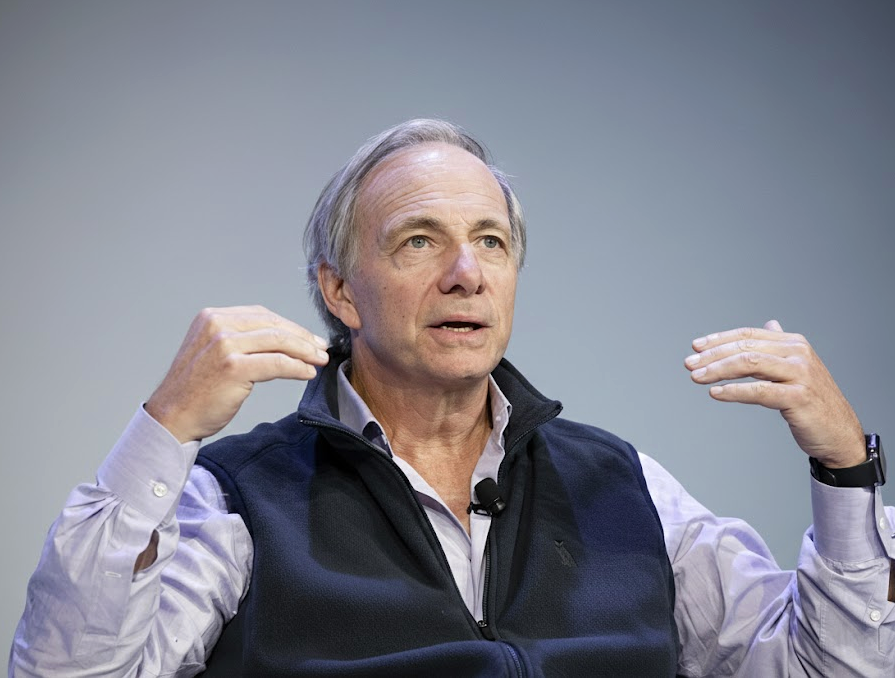
Ray Dalio by TechCrunch, licensed under CC BY 2.0. Background modified.